
Aiken Property Tax Records
Aiken property tax records are administered through a shared system involving both Aiken County and the City of Aiken. The Aiken County Assessor determines fair market values for all real property, while the City of Aiken collects taxes on real, merchants, and personal property within city limits. Whether you are researching a current bill, looking up a past payment, or trying to understand how the city millage rate affects your tax amount, this page explains the full process for accessing Aiken property tax records.
Aiken Property Tax Quick Facts
How Aiken City Property Taxes Work
The City of Aiken operates a two-office tax system. The Aiken County Assessor handles property valuation for all parcels inside city limits. The City of Aiken Finance Department then applies the city millage rate and collects the resulting tax bills. These are separate functions performed by separate offices, and understanding which office handles what prevents confusion when questions arise.
The City of Aiken collects taxes on three categories of property: real property, merchants property, and personal property. Real property includes land and structures. Merchants and personal property categories cover business-related assets. For residential owners, real property tax is the primary concern. The city's current millage rate of 60 mills has been in place since 2021 and applies to all taxable property within Aiken city limits.
Importantly, all property assessment changes and error corrections must go through the Aiken County Tax Assessor's office. The City of Aiken Finance Department does not have authority to alter assessed values or correct assessment records. If you believe your assessed value is wrong, contact the Aiken County Assessor directly at (803) 642-1583, located at 1930 University Parkway, Aiken, SC.
The South Carolina Department of Revenue sets statewide property tax policy but does not collect Aiken city or county taxes. Local collection remains entirely with city and county offices.
Aiken County Assessment Ratios and Tax Calculation
Assessment ratios determine what portion of a property's fair market value is taxable. Under S.C. Code Ann. Title 12, Chapter 43, owner-occupied primary residences in Aiken are assessed at 4% of fair market value. Commercial properties, rental properties, and non-owner-occupied homes carry a 6% assessment ratio. Manufacturing property is assessed at 10.5%.
The tax calculation for Aiken city property follows a straightforward formula. A home with a $100,000 fair market value assessed at the 4% owner-occupied rate produces an assessed value of $4,000. Multiplying that assessed value by the city millage rate of .060 yields an annual city tax of $240. For a $250,000 home, the same calculation produces an assessed value of $10,000 and an annual city tax of $600 before any exemptions.
The 6% commercial rate produces a significantly higher tax burden on the same property. A $100,000 commercial property carries a $6,000 assessed value and a city tax of $360 annually at 60 mills. This ratio difference is one reason qualifying for the 4% legal residence rate matters for homeowners in Aiken.
Note: The figures above reflect only the City of Aiken portion of the tax bill. Aiken County millage and school district millage are added separately, making the total bill higher than the city portion alone.
Aiken Property Tax Records: Online Search and Access
The Aiken County Assessor maintains property records for all parcels in the county, including those within Aiken city limits. The county website at aikencountysc.gov is the primary online source for assessed values, ownership history, and parcel data. Searching by address or parcel number brings up the current assessment, any exemptions applied, and the ownership record on file.
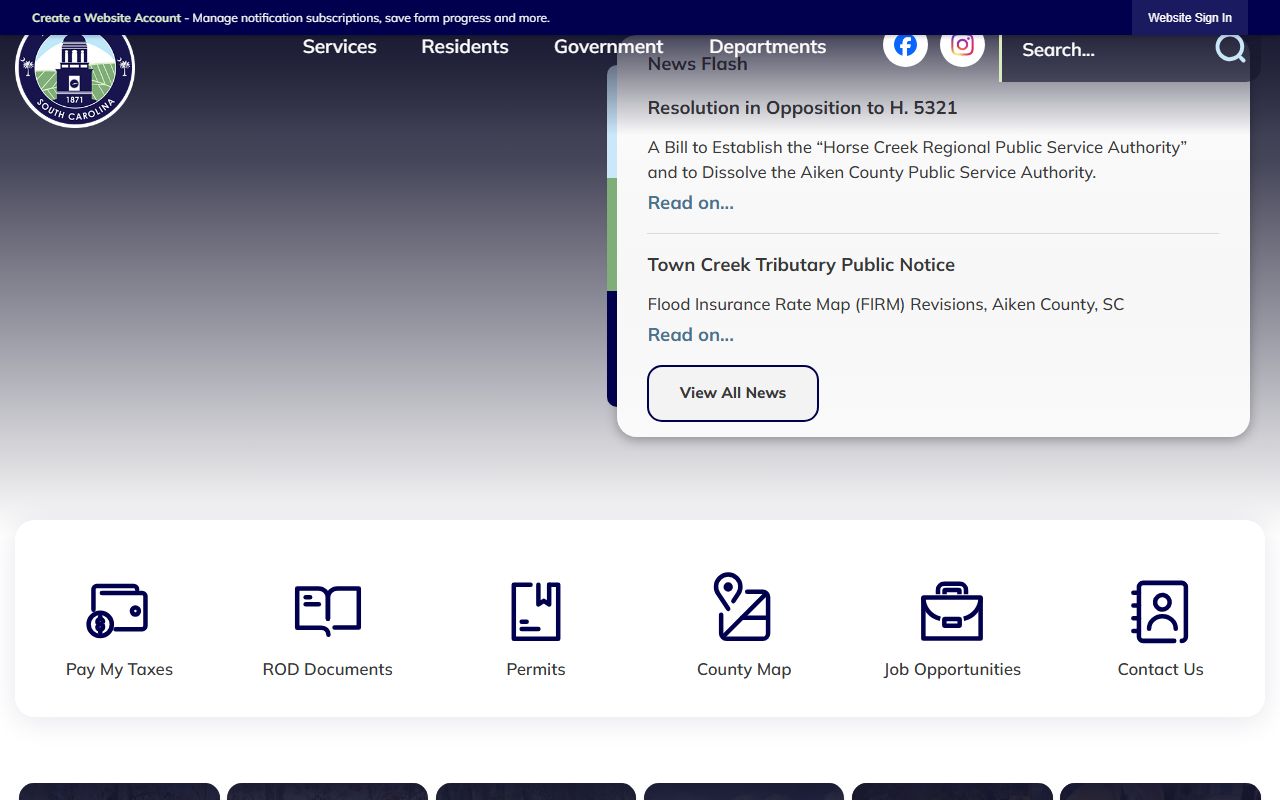
The Aiken County Assessor portal displays fair market values, legal descriptions, and assessment classification for each parcel. This is the authoritative source for understanding why your bill reflects a particular assessed value. For city-specific tax information including payment status and bill history, the City of Aiken Finance Department at cityofaikensc.gov/taxes provides additional resources.
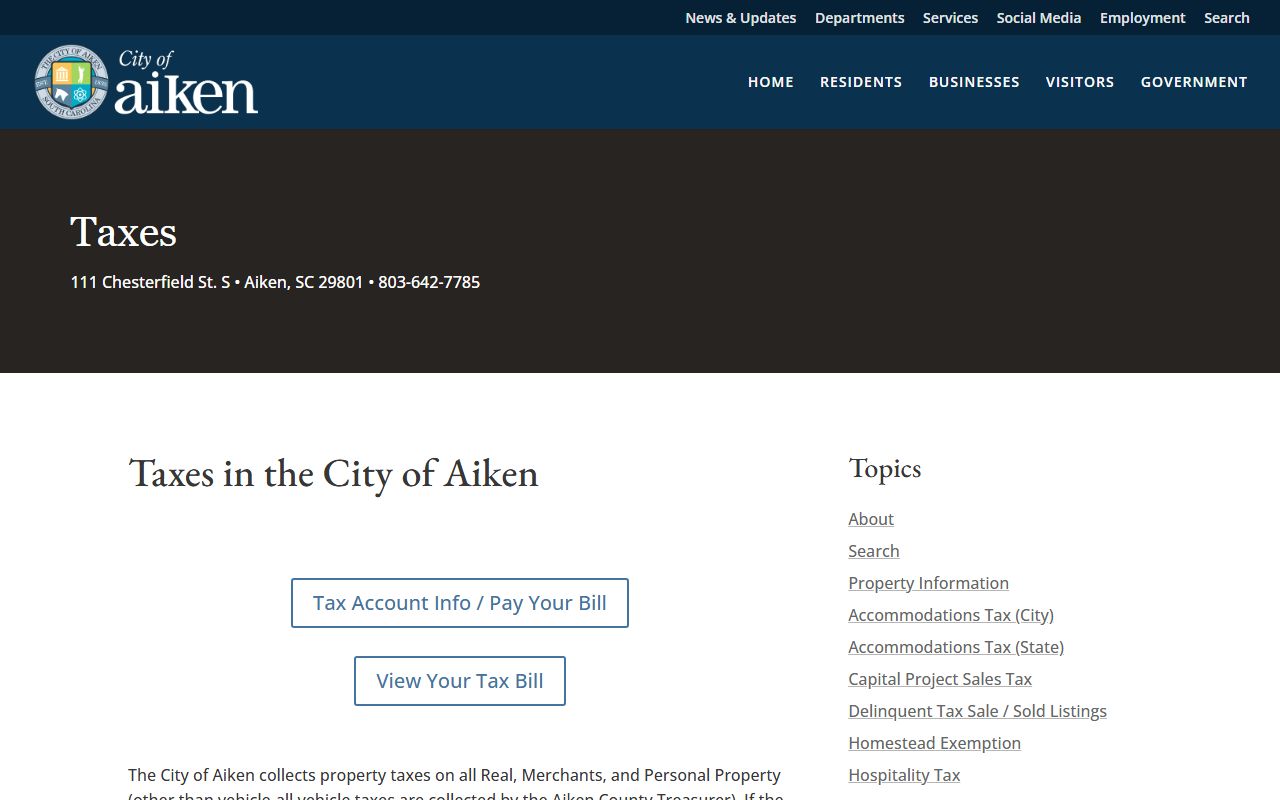
The City Finance Department can be reached at (803) 642-7600 and is located at 111 Chesterfield St. S, Aiken, SC 29801. Staff can help with questions about your city tax bill, payment options, and account status. For assessed value disputes or classification questions, you must direct those inquiries to the Aiken County Assessor, not the city office.
Aiken Tax Due Dates, Penalties, and Tax Sale
Aiken city tax books open on October 16 each year. The 2025 tax books opened October 16, 2025, with a due date of January 15, 2026, for payment without penalty. This January 15 due date aligns with the statewide schedule established under S.C. Code Ann. Title 12, Chapter 45.
After January 15, Aiken applies a graduated penalty schedule that increases over time. A 5% penalty applies from January 16 through February 16. The penalty rises to 10% for payments made between February 17 and March 16. From March 17 through April 17, a 15% penalty applies. After April 20, an additional 2.5% is added to the outstanding balance. These compounding penalties make timely payment critical.
Properties with unpaid taxes are subject to the annual tax sale held each November. The delinquency process follows S.C. Code Ann. Title 12, Chapter 51, which provides property owners a 12-month redemption period after a tax sale. During that window, the owner can pay the delinquent taxes, penalties, and associated costs to reclaim the property. After 12 months without redemption, the purchaser at the tax sale can pursue a tax deed.
Note: Aiken's penalty schedule is more aggressive than the baseline state schedule, with the 15% tier reaching as high as 17.5% after April 20. Paying before January 15 is the only way to avoid any penalty.
Aiken Homestead Exemption and Other Property Tax Relief
South Carolina's Homestead Exemption provides meaningful tax relief for qualifying Aiken property owners. Homeowners who are 65 or older, permanently disabled, or legally blind may qualify for an exemption of the first $50,000 of their home's fair market value. Applications for the Homestead Exemption go through the Aiken County Auditor, not the City Finance Department.
The exemption is addressed under S.C. Code Ann. Title 12, Chapter 37, which also establishes that counties must maintain a full-time assessor to administer property taxation. Aiken County operates under these requirements, and the County Assessor's office is the gatekeeper for both assessment classifications and exemption eligibility determinations that flow up to the Auditor.
The 4% legal residence rate is itself a form of tax relief. Homeowners who use their Aiken property as a primary domicile should apply for this classification if they have not already done so. The difference between paying at 4% versus 6% is significant on most Aiken home values. Contact the Aiken County Assessor at (803) 642-1583 to file the legal residence application.
Aiken Property Tax Assessment Appeals
If you disagree with the assessed value assigned to your Aiken property, the first step is contacting the Aiken County Assessor. The Assessor can review the record for errors, compare the value against similar properties, and make corrections if warranted. Many valuation disputes are resolved at this informal level without requiring a formal appeal.
Formal appeals in Aiken follow a structured process. After the Assessor issues a written decision, the property owner may appeal to the Aiken County Board of Assessment Appeals. If still unsatisfied, further appeals proceed to the Administrative Law Court under S.C. Code Ann. Title 12, Chapter 60. The Administrative Law Court handles contested property tax matters statewide and provides an independent review of county assessment decisions.
South Carolina's five-year reassessment cycle under Chapter 43 can trigger significant value changes. When a countywide reassessment occurs in Aiken County, property owners receive notice of their new assessed values. That notice period is the standard window for filing an appeal if the new value appears excessive. The South Carolina Association of Counties provides guidance on the reassessment process and property owner rights statewide.
Aiken Millage Rate and How It Compares
The City of Aiken's millage rate of 60 mills represents the city's share of property tax. It funds municipal services including public safety, roads, parks, and city administration. This rate applies only to properties within Aiken city limits. Properties outside the city in Aiken County pay county and school district millage but not this city rate.
Millage rates are set annually through the local government budget process. The 60-mill city rate has been stable since 2021. Combined with Aiken County millage and the applicable school district millage, the total mill rate affecting Aiken city property owners is higher than the city portion alone. The county assessor's office can provide the full mill rate breakdown applicable to a specific parcel.
For property owners comparing Aiken to other South Carolina cities, the South Carolina Association of Counties publishes annual millage rate data across all counties and municipalities. This resource allows direct comparisons and provides context for whether Aiken's overall tax burden is typical for the region.
Aiken County Property Tax Records
Aiken city property records are maintained at the county level. Visit the Aiken County page for assessor contact details, parcel search tools, and full county tax information.