
McCormick County Tax Records
McCormick County property tax records are maintained by the county Assessor's office located at 133 South Mine Street, McCormick, SC. These records document ownership, assessed values, and annual tax obligations for all real property within the county. Whether you are researching a parcel's history, verifying an assessment, or tracking payment status, McCormick County's property tax records provide essential information. South Carolina law governs how these records are kept, how values are set, and when taxes are due. This page will help you understand the process and locate the records you need.
McCormick County Property Tax Quick Facts
McCormick County Assessor Property Records
The McCormick County Assessor is the official responsible for identifying, listing, and valuing all real property in the county. Every parcel of land, every home, and every commercial structure falls within the Assessor's jurisdiction. The Assessor's office at 133 South Mine Street maintains records that include ownership information, property descriptions, deed references, building permit data, and tax maps. These are the foundational documents used to calculate each property owner's annual tax bill.
Under South Carolina Code Title 12, Chapter 37, the Assessor must maintain current ownership records using deed recordings, building permits, and other instruments. When a property sells, the deed recorded with the Register of Deeds triggers an update to the Assessor's records. This chain of documentation allows anyone researching a parcel to trace ownership and valuation history over time.
McCormick County is a small, rural county in the western part of South Carolina. Despite its size, the same state-mandated processes apply here as in any larger county. The Assessor's records are public documents, and the office works to keep them accurate and accessible.
Assessment Ratios for McCormick Property
South Carolina uses a fractional assessment system. Not every property is assessed at the same percentage of its fair market value. The ratio depends on the property's use. Owner-occupied residential properties, those receiving the legal residence designation, are assessed at 4% of fair market value. Commercial properties are assessed at 6%. Manufacturing real property carries a 10.5% ratio.
This system means a home with a fair market value of $150,000 and the 4% legal residence designation would carry an assessed value of $6,000. That assessed value is then multiplied by the applicable millage rate to determine the tax owed. The lower ratio for owner-occupied homes is a significant benefit for McCormick County homeowners who claim their property as their primary residence.
Chapter 43 of Title 12 governs reassessment cycles in South Carolina. Counties must conduct a reassessment of all real property at least once every five years. This process updates fair market values county-wide to reflect current market conditions. After a reassessment, assessed values may change, but the assessment ratio itself does not.
Note: If your property use changes, such as converting from owner-occupied to rental, the assessment ratio will change from 4% to 6%, which will affect your tax bill.
How McCormick County Tax Bills Are Calculated
The county Auditor uses the Assessor's values to generate tax bills. The formula is straightforward. The Assessor sets the fair market value. The assessment ratio is applied to get the assessed value. The millage rate set by local governing bodies is then multiplied against that assessed value. Any applicable exemptions are subtracted.
McCormick County's millage rate reflects the combined levies of county government, school districts, and any applicable special purpose districts. The South Carolina Department of Revenue plays a role in this process as well, certifying values and overseeing certain aspects of the property tax system statewide. Local offices work within the framework that SCDOR and the General Assembly establish.

The South Carolina Department of Revenue provides oversight and resources related to property tax administration throughout the state, including McCormick County. Property owners can find additional guidance on assessment, exemptions, and appeals on the SCDOR website.
McCormick County Tax Payment and Due Dates
Property taxes in McCormick County are due by January 15 of the year following the tax year. A tax bill for the 2025 tax year, for example, would be due January 15, 2026. The postmark on mailed payments is accepted as the payment date, provided the envelope bears a United States Postal Service postmark on or before the due date.
Missing the January 15 deadline triggers a penalty structure defined in Title 12, Chapter 45. A 3% penalty applies first. If payment is still not received, an additional 7% penalty follows. A further 5% penalty may be added after that. These penalties accumulate, making timely payment important. Chapter 45 also provides for installment payment plans, which allow property owners to spread payments across multiple installments rather than paying in a single lump sum.
Note: The US postmark rule is important. A payment dropped in a mailbox on January 15 with that date's postmark is considered on time, even if it arrives at the Treasurer's office after the deadline.
Delinquent Tax Records in McCormick County
When taxes remain unpaid after the penalty period, the account becomes delinquent. The McCormick County Treasurer's office initiates the delinquency collection process, which is governed by Title 12, Chapter 51. A formal delinquency notice is issued on April 1. At that point, the property owner has a 12-month redemption period during which the taxes, penalties, and any associated fees may still be paid to redeem the property.
Delinquent tax records become public and are often published to notify potential bidders at tax sales. If a property is not redeemed within the allowed period, the county may proceed with a tax sale. These records are maintained by county offices and can be researched through the Treasurer's office.
Under Title 12, Chapter 49, property taxes constitute the first lien on real property. This lien attaches on December 31 of the tax year, meaning it takes priority over most other claims against the property. Anyone researching a McCormick County property for purchase should verify whether any delinquent tax liens are outstanding.
Homestead Exemption for McCormick County Residents
South Carolina's Homestead Exemption program offers meaningful tax relief to eligible property owners. Residents who are 65 years of age or older, legally blind, or permanently disabled may qualify for an exemption equal to the first $50,000 of their property's fair market value. This reduces the taxable base significantly.
To qualify, applicants must have owned and occupied the property as their legal residence for at least one full year. Applications are filed with the McCormick County Auditor's office. Once approved, the exemption remains in place as long as the owner continues to meet the eligibility requirements. The Homestead Exemption is among the most valuable tax relief programs available to qualifying McCormick County residents.
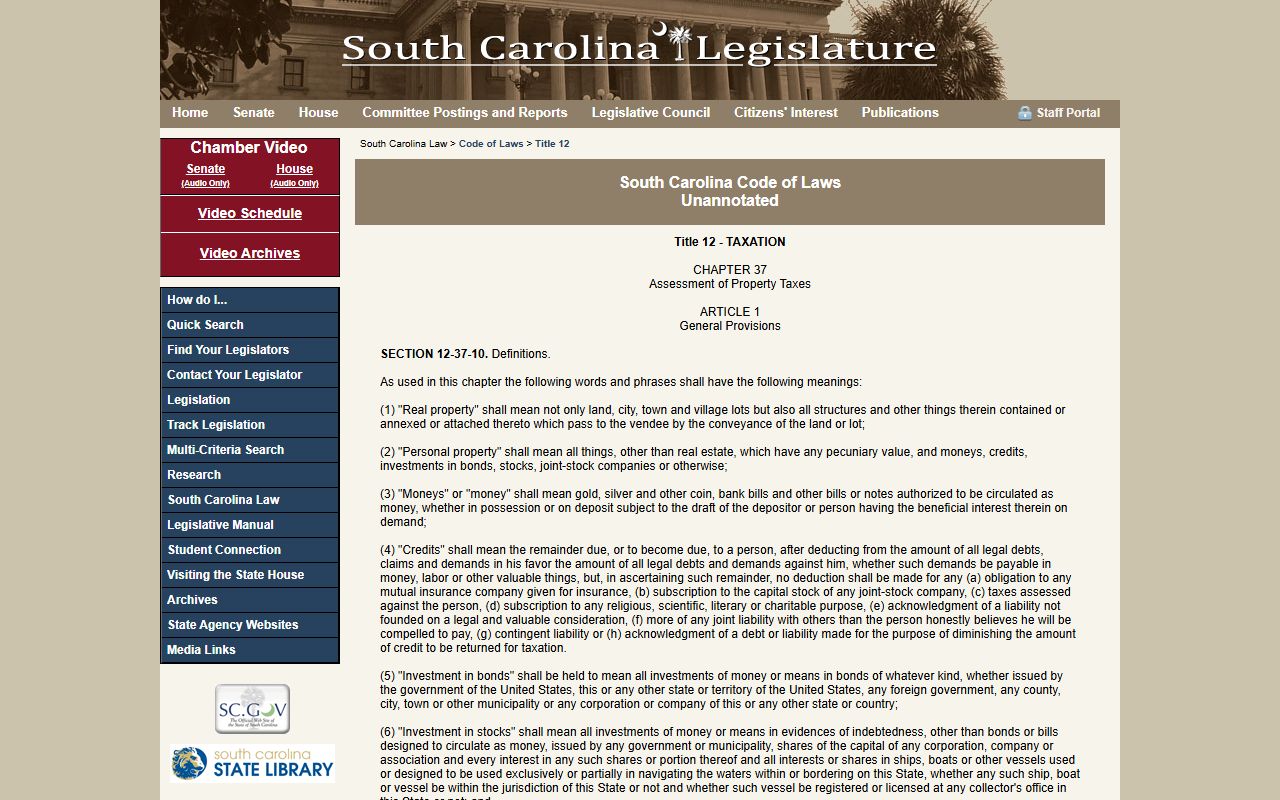
South Carolina Code Title 12, Chapter 37 outlines the responsibilities of county assessors across the state, including McCormick County. This chapter covers how deed records, building permits, and tax maps must be maintained to support accurate property assessment.
Appealing Your McCormick County Property Assessment
Property owners who believe their assessment is inaccurate have the right to appeal. The first step is filing an appeal with the McCormick County Assessor's office. The Assessor will review the appeal and issue a determination. If the owner is not satisfied with the result, the appeal can be elevated to the county Board of Assessment Appeals.
Further appeals may proceed to the South Carolina Administrative Law Court under Title 12, Chapter 60. This multi-step process ensures that property owners have meaningful opportunities to challenge values they believe are incorrect. Documentation supporting the appeal, such as recent comparable sales or an independent appraisal, strengthens the owner's position at each stage.
Appeals must generally be filed within a specific window after receiving a notice of assessment change. Property owners should contact the McCormick County Assessor promptly if they wish to dispute a value.
Note: An appeal does not delay the due date of your tax bill. Taxes should still be paid on time while an appeal is pending to avoid penalties.
McCormick County Property Tax Records and the Register of Deeds
The Register of Deeds plays a critical role in property tax record-keeping. Deeds, mortgages, plats, and other instruments recorded with the Register become the source documents that the Assessor uses to update ownership records. When a property sale closes, the deed is recorded, and that recording flows through to the Assessor's database.
Tax maps maintained by the Assessor's office cross-reference the recorded deeds, providing a geographic representation of every parcel in McCormick County. These maps are valuable tools for understanding property boundaries, identifying adjacent parcels, and researching the history of land division in the county.
The South Carolina Association of Counties supports county offices across the state in maintaining these records and providing public access. McCormick County, like all 46 South Carolina counties, operates within this network of local and state resources.
Nearby Counties
McCormick County borders several other South Carolina counties where property tax records are similarly maintained and accessible.