
Find Lancaster County Property Tax Records
Lancaster County property tax records are maintained at county offices in Lancaster, the county seat, at 101 North Main Street. The Assessor, Auditor, and Treasurer each handle separate functions within the property tax system. Together, these offices produce and maintain the records that reflect how property in Lancaster County is valued, classified, and taxed. This page covers the record types available, the offices that hold them, the assessment ratios that apply, and the deadlines and penalties that Lancaster County property owners need to know.
Lancaster County Property Tax Quick Facts
Lancaster County Assessor and Property Records
The Lancaster County Assessor is responsible for identifying, listing, and valuing all real property in the county. Under South Carolina Code Title 12, Chapter 37, every county must maintain a full-time assessor. Lancaster County's assessor office is located at 101 North Main Street in the county seat. The Assessor's responsibilities under Chapter 37 include maintaining deed records, building permits, and tax maps, as well as discovering and listing any unlisted property within Lancaster County.
Lancaster County property tax records at the Assessor level include the parcel identification number, current owner name and mailing address, property description, fair market value, assessed value, and property classification. Each of these data points has a direct effect on the tax bill. Classification is especially important because it determines the assessment ratio that applies. Residential properties used as a primary residence are assessed at 4% of fair market value. Commercial properties and non-primary residential properties carry a 6% ratio. Manufacturing and industrial uses are assessed at 10.5%, as set by Chapter 43.
Tax maps maintained by the Lancaster County Assessor show parcel boundaries throughout the county. These maps are updated when parcels are divided, combined, or newly platted. Plat maps recorded through the county's Register of Deeds provide additional detail on subdivisions and lot configurations. Together, the tax maps and plat maps help verify exactly what land is being assessed in any given Lancaster County property tax record.
Note: Lancaster County property owners should contact the Assessor's office to verify their property classification, especially after a purchase or construction project. Getting the classification right ensures the correct assessment ratio is applied from the start.
Lancaster County Property Tax Assessment Ratios
Assessment ratios in Lancaster County are set by state law under Section 12-43-220. These ratios determine what percentage of a property's fair market value is used to calculate the taxable assessed value. For a Lancaster County home with a fair market value of $300,000 and a 4% owner-occupied ratio, the assessed value on record is $12,000. The county and district millage rates are then applied to that $12,000 figure to produce the annual tax bill.
Agricultural land in Lancaster County also benefits from favorable assessment ratios. Land used for genuine agricultural purposes by private owners qualifies for the 4% ratio. Corporate-owned agricultural land is assessed at 6%. These distinctions appear in the Lancaster County property tax records maintained by the Assessor. Landowners who believe their agricultural use qualifies for the lower ratio should apply through the Assessor's office and provide supporting documentation of the agricultural activity.
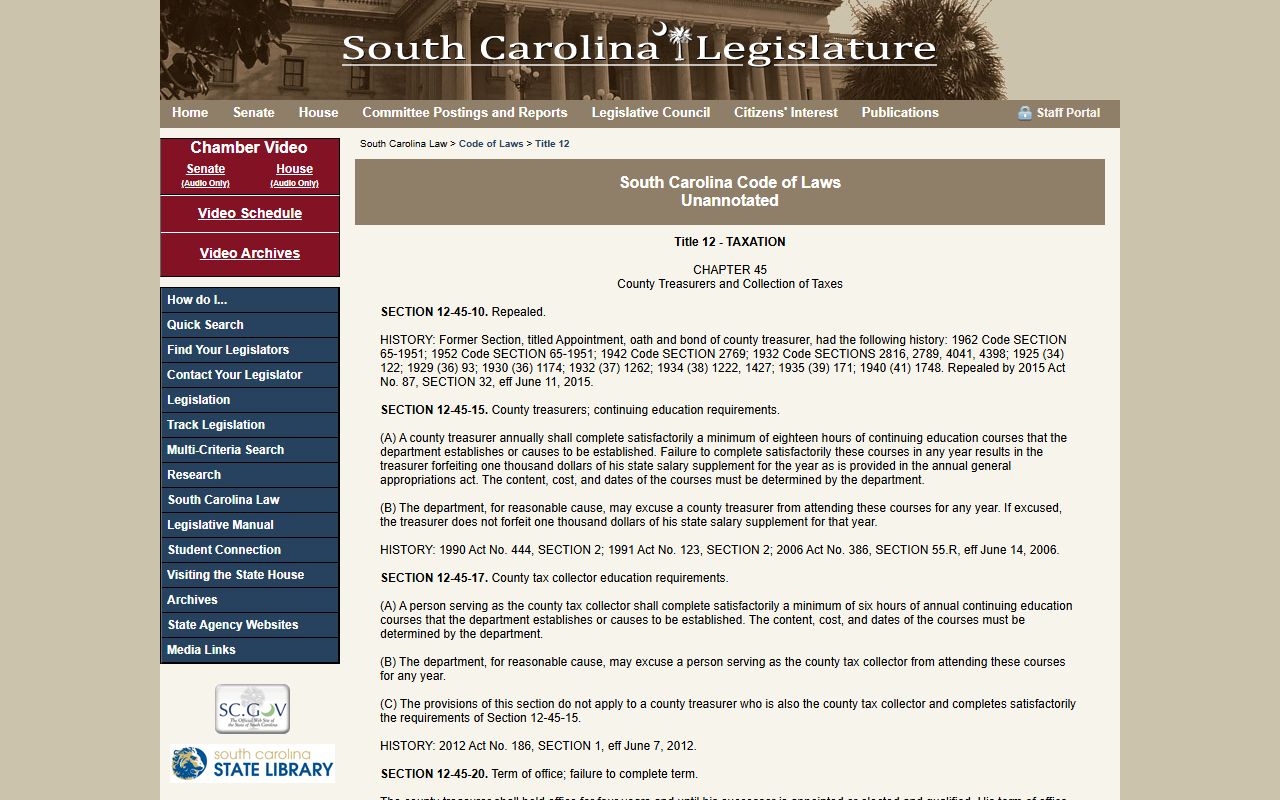
Chapter 45 governs the collection functions of county treasurers, including the due dates and penalty structure for property taxes. Lancaster County follows this framework. Knowing the ratios and how payments are calculated helps property owners review their Lancaster County tax records and verify that the bill they receive is correct.
Paying Lancaster County Property Taxes
Lancaster County property taxes are due on January 15 each year. The Lancaster County Treasurer's office at 101 North Main Street processes all payments and maintains payment records. South Carolina law, under Chapter 45, provides that the US postmark date determines whether a mailed payment is considered timely. A payment postmarked on or before January 15 is treated as on time even if it arrives after the deadline.
Penalties for late payment follow a defined schedule. Beginning January 16, a 3% penalty applies to unpaid balances. After February 2, an additional 7% penalty is added. If taxes still remain unpaid after March 16, a further 5% penalty applies. These amounts stack, so a Lancaster County property owner who waits until late March faces a significant increase over the original bill. Installment payment plans are available for property owners who need flexibility. Contact the Lancaster County Treasurer's office to ask about installment options before the deadline passes.
Property taxes in South Carolina are a first lien on real property under Chapter 49. This lien attaches on December 31 of each year. Buyers and lenders reviewing Lancaster County property tax records should confirm that there are no outstanding tax obligations before completing a transaction, since this lien takes priority over most other encumbrances.
Delinquent Tax Records in Lancaster County
When property taxes in Lancaster County go unpaid past the penalty stages, the account enters delinquent status. South Carolina Code Chapter 51 defines the delinquent process. Lancaster County must send delinquency notices by April 1. Properties with unpaid taxes are then advertised over a three-week period before being offered at a delinquent tax sale.
Lancaster County property owners who lose their property at a tax sale retain a 12-month redemption right. During this period, the owner can recover the property by paying all outstanding taxes, penalties, and associated costs. The redemption amount grows on a quarterly schedule: 3% is added for the first quarter after the sale, 6% for the second, 9% for the third, and 12% for the fourth. After 12 months, if the owner has not redeemed the property, the tax sale purchaser moves toward clearing title.
Delinquent tax records in Lancaster County are public documents. Researchers, investors, and property owners who want to check whether a parcel has outstanding tax obligations can access these records. Reviewing delinquent tax status is a useful step when evaluating any Lancaster County property, whether for purchase or other purposes.
Note: The Lancaster County Auditor prepares the tax rolls used by the Treasurer for collection. Errors in the tax roll, such as incorrect ownership or classification, should be brought to the Auditor's attention before the bill is generated.
Homestead Exemption for Lancaster County Homeowners
The South Carolina Homestead Exemption provides significant relief for qualifying Lancaster County residents. The exemption removes the first $50,000 of fair market value from the assessed calculation. Property owners who qualify are those who are 65 years of age or older, legally blind, or permanently and totally disabled. The property must be the owner's primary residence, and the owner must have held title for at least one full year before applying.
Applications for the Homestead Exemption in Lancaster County are submitted through the Lancaster County Auditor's office. Once approved, the exemption is reflected in the property tax record and reduces the taxable value for future tax years. The exemption does not apply automatically after a property purchase or after a qualifying event like turning 65. Property owners in Lancaster County must actively apply to receive the benefit.

The South Carolina Association of Counties provides statewide resources that can help Lancaster County residents understand the full range of exemptions available, including Homestead, agricultural, and nonprofit exemptions. These resources are useful for property owners who want a broader understanding of how South Carolina property tax law affects their specific situation.
Lancaster County Property Records and the Five-Year Reassessment
Lancaster County conducts a countywide reassessment every five years, as required by Section 12-43-217. The reassessment reviews market data and updates the fair market value assigned to each parcel. All Lancaster County property tax records are updated following the reassessment, and property owners receive notice if their value has changed.
Between reassessments, Lancaster County property tax records stay fixed unless a qualifying event occurs. A sale, new construction, or subdivision can all trigger a value update outside the normal cycle. Property owners who complete improvements or divide land should expect an updated assessment that reflects the change. The Assessor uses building permit data to identify these situations and update the appropriate records.
The South Carolina Code Title 12 governs the full property tax system from assessment through collection. The South Carolina Department of Revenue provides oversight and guidance to county assessors to ensure consistent application of valuation methods and assessment ratios. Lancaster County property tax records are maintained within this broader state framework, which means property owners have well-defined rights and remedies when errors occur.
Appealing a Lancaster County Property Tax Assessment
Lancaster County property owners who disagree with their assessed value can file an appeal under Chapter 60 of Title 12. The appeal begins with a written request to the Lancaster County Assessor. If the Assessor's review does not produce a satisfactory outcome, the property owner can bring the matter before the Lancaster County Board of Assessment Appeals. Further escalation is possible to the Administrative Law Court, which handles property tax disputes from across the state.
Strong appeals include documentation supporting a different value. Recent comparable sales in Lancaster County, an independent appraisal, or evidence that the property's condition was not accurately reflected in the Assessor's data all help support a lower value. Deadlines for filing appeals are strict. Once the appeal window closes after the assessment notice, the assessed value stands for that tax year regardless of the dispute. Lancaster County property owners should review assessment notices promptly and file an appeal quickly if they believe the value is incorrect.
Nearby Counties
Lancaster County shares borders with several South Carolina counties where similar property tax record systems are in place.