
Lexington County Property Tax Records and Assessments
Lexington County property tax records are maintained by the Assessor, Auditor, and Treasurer at county offices in Lexington, the county seat, at 212 South Lake Drive. The Lexington County Assessor can be reached at (803) 785-8330 and is responsible for assessing and valuing all real property, maintaining tax maps, and keeping ownership records current. This page explains how Lexington County property tax records are organized, what assessment ratios apply, when taxes are due, and what rights property owners have under South Carolina law.
Lexington County Property Tax Quick Facts
Lexington County Assessor Property Records
The Lexington County Assessor's office at 212 South Lake Drive in Lexington maintains the primary property tax records for all real property in the county. Under South Carolina Code Title 12, Chapter 37, every county must have a full-time assessor. The Lexington County Assessor's responsibilities include assessing and valuing real property, maintaining a complete inventory of real estate parcels, keeping property tax mapping current, maintaining ownership records, providing assessment forms, and answering real property questions from property owners.
Lexington County property tax records at the parcel level include the parcel identification number, the owner's name and mailing address, the legal description, the fair market value assigned by the Assessor, the assessed value, and the property classification. Classification is the key variable in the assessment calculation. Owner-occupied residential property up to five acres is assessed at 4% of fair market value under Section 12-43-220. Commercial and non-primary residential property carries a 6% ratio. Manufacturing and industrial uses are assessed at 10.5%. These ratios are applied uniformly across all of Lexington County.
Tax mapping is a significant part of the Lexington County Assessor's work. The county has grown substantially in recent decades, and the Assessor maintains detailed parcel maps that track boundaries across both rural and developed areas. Building permits issued throughout Lexington County feed into the assessment process. When new construction is completed, the Assessor updates the property record to reflect the added value. This ensures that improvements are captured in Lexington County tax records in a timely manner.
Note: Lexington County property owners who have questions about their assessed value, property classification, or assessment forms can contact the Assessor's office directly at (803) 785-8330 or visit 212 South Lake Drive in Lexington.
Lexington County Assessor Online Resources
Lexington County provides online access to property tax resources through the county's official website. The Assessor's portal allows property owners and researchers to look up parcel information, review assessed values, and access property maps without visiting the office in person.
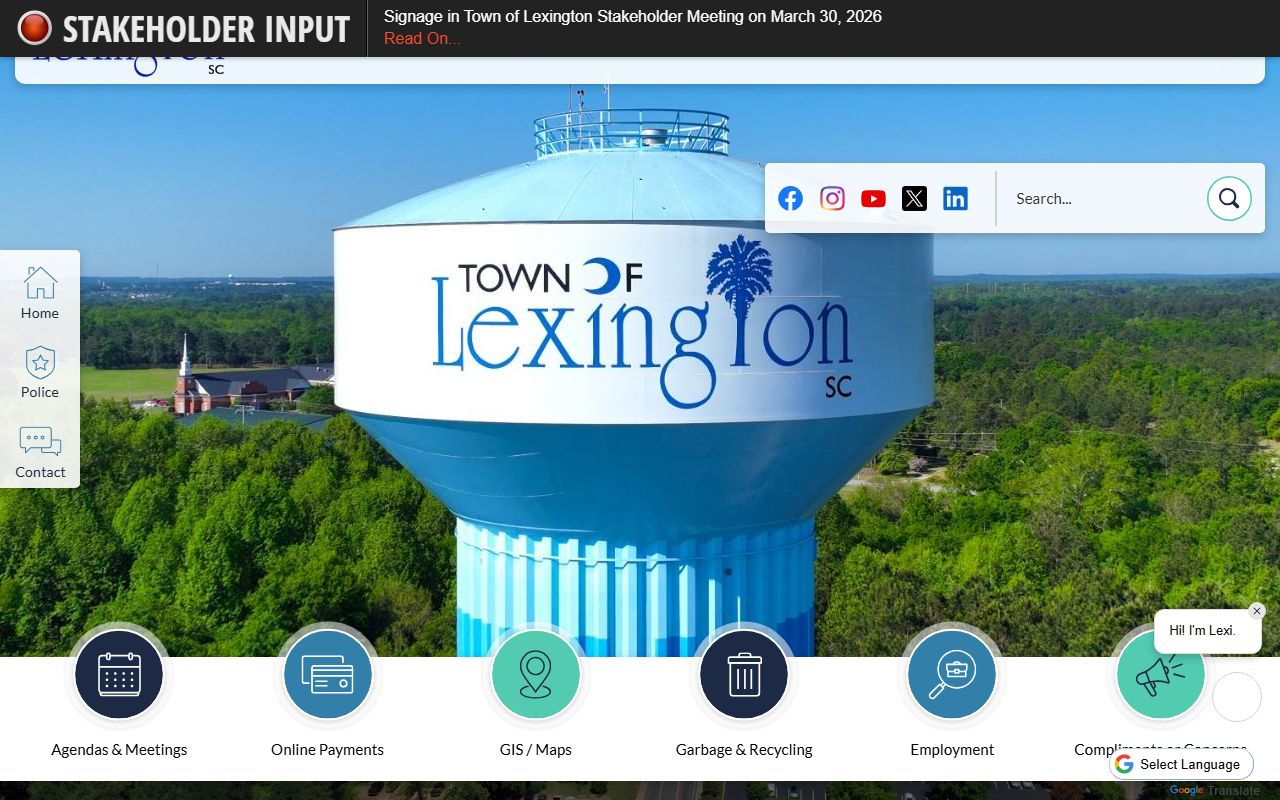
The Lexington County government website provides access to county services, including property tax resources managed by the Assessor. The site includes information on how to search parcel records, review ownership data, and submit assessment-related forms. Property owners in the town of Lexington and throughout the county can use these resources to review their records before visiting the county offices.
Online resources for Lexington County property tax records are useful for confirming parcel data, checking ownership information, and verifying that exemptions are correctly applied. Researchers conducting title searches or due diligence on Lexington County real estate can use these tools as a starting point, though official records should always be confirmed through the appropriate county office for any transaction-related purpose.
Lexington County Property Tax Payment Records
Lexington County property taxes are due January 15 each year. The Lexington County Treasurer's office at 212 South Lake Drive processes all payments and maintains the payment history for every parcel. Under Chapter 45 of the South Carolina Code, the US postmark date governs whether a mailed payment is timely. Payments postmarked on or before January 15 are treated as received by the deadline.
Missing the January 15 deadline triggers a graduated penalty schedule. A 3% penalty applies after January 15. An additional 7% penalty is added after February 2. After March 16, another 5% penalty applies. These penalties are cumulative, meaning a Lexington County property owner who pays in late March owes the original tax plus 15% in combined penalties. Given the size of Lexington County's tax base and the number of parcels, the Treasurer's office handles significant payment volume annually. Property owners who anticipate difficulty meeting the deadline should contact the Treasurer about installment payment options before the due date.
Property taxes are a first lien on real property in South Carolina. Under Chapter 49, this lien attaches on December 31. Buyers and lenders reviewing Lexington County property tax records should confirm that no prior-year balances remain unpaid. This is a standard step in any real estate transaction in Lexington County.
Lexington County Delinquent Tax Records
When Lexington County property taxes go unpaid past the penalty stages, the account becomes delinquent under Chapter 51 of the South Carolina Code. The county must send delinquency notices by April 1. Properties with unpaid taxes are advertised over a three-week period before the delinquent tax sale. The sale allows the county to recover unpaid obligations while preserving the original owner's redemption rights.
Lexington County property owners who lose property at a delinquent tax sale have a 12-month redemption window. During this period, the original owner can reclaim the property by paying all outstanding taxes, penalties, and costs. The redemption addition increases quarterly: 3% for the first quarter, 6% for the second, 9% for the third, and 12% for the fourth. After 12 months, the right to redeem expires and the tax sale purchaser moves toward title.
Delinquent tax records in Lexington County are public documents. Reviewing these records helps buyers confirm that a property has no unresolved tax obligations. Given the active real estate market in Lexington County and its proximity to the Columbia metropolitan area, thorough review of property tax records, including delinquent status, is an important step in any purchase.
Note: Lexington County delinquent tax sale schedules and lists of delinquent properties are available through the county. Contacting the Treasurer or Delinquent Tax Collector's office in Lexington provides the most current information on properties with outstanding obligations.
Homestead Exemption in Lexington County
South Carolina's Homestead Exemption provides meaningful property tax relief for qualifying Lexington County homeowners. The exemption removes the first $50,000 of fair market value from the taxable assessment. For a home valued at $250,000 with the exemption applied, only $200,000 of fair market value is subject to the assessment ratio and millage calculation.
Qualifying Lexington County residents include those who are 65 or older, legally blind, or permanently and totally disabled. The property must be the applicant's primary residence. The owner must have held title for at least one full year before applying. Applications go through the Lexington County Auditor's office at 212 South Lake Drive. Once approved, the exemption is reflected in the Lexington County property tax record and applies to future tax years automatically.
Other exemptions are also available under Chapter 37. Agricultural products stored on farms may qualify for exemption. Properties owned by qualifying churches, schools, and nonprofits may be fully exempt. Lexington County property owners who believe they qualify for any exemption should apply through the appropriate office rather than assuming the exemption is applied automatically. The Assessor or Auditor can explain the specific requirements for each type of exemption available in Lexington County.
Lexington County Five-Year Reassessment and Records
South Carolina requires countywide reassessment every five years under Section 12-43-217. Lexington County follows this schedule. The Assessor reviews market data across the county and updates fair market values for every parcel during the reassessment year. Property owners receive notice when their assessed value changes. This notice marks the beginning of the appeal window for that reassessment cycle.
Between reassessment years, Lexington County property tax records hold their assessed values steady for most parcels. A sale of the property, new construction, or a change in use are the primary events that trigger a value update outside the five-year cycle. Lexington County has experienced significant development, especially in areas near Lexington town and along major corridors. Property owners in these growing areas should monitor their records carefully, as improvements and nearby development activity can affect assessments at reassessment time.
The South Carolina Department of Revenue provides oversight for county assessors statewide, including Lexington County. DOR publishes guidance on assessment methods, ratio requirements, and the overall standards that county assessors must meet. The South Carolina Association of Counties also provides resources that help property owners navigate the reassessment and appeal process in Lexington County and across the state.
Appealing Lexington County Property Tax Assessments
Lexington County property owners who disagree with their assessed value have the right to appeal under Chapter 60 of the South Carolina Code. The appeal process begins with the Lexington County Assessor. A written appeal must be submitted within the window specified on the assessment notice. The Assessor reviews the evidence and issues a determination. If the outcome is not satisfactory, the property owner can escalate to the county Board of Assessment Appeals.
Further escalation is available at the Administrative Law Court level. This court handles property tax disputes from all 46 South Carolina counties and is the final administrative step before circuit court. Chapter 60 defines the procedures, timelines, and documentation requirements that apply throughout the process. Missing any deadline along the way can end the appeal for that tax year.
A strong appeal of a Lexington County property tax record includes recent comparable sales data, independent appraisal reports, and evidence that the Assessor's data does not accurately reflect the property's condition, size, or classification. Given that Lexington County has a well-developed real estate market, comparable sales are generally available and can be effective in supporting a lower assessed value. The South Carolina Code Title 12 provides the full legal framework governing all aspects of this process.
Nearby Counties
Lexington County is adjacent to several South Carolina counties where similar property tax record systems and assessment practices apply.