
Richland County Property Tax Records in Columbia
Richland County property tax records are maintained at the Assessor's office located at 2020 Hampton Street, Suite 2067, Columbia, SC 29204. As the county seat of South Carolina's state capital, Columbia, Richland County holds a substantial and diverse real estate market. Richland County carries the highest average effective property tax rate in South Carolina at approximately 0.74%. Property owners, buyers, and researchers can access a range of online tools including property value inquiry, tax bill search, and a tax estimate calculator. This page covers how Richland County property tax records work from assessment through collection.
Richland County Property Tax Quick Facts
Richland County Property Tax Rate in South Carolina
Richland County has the highest average effective property tax rate in South Carolina, sitting at approximately 0.74%. This figure reflects the combined millage levied by county government, the City of Columbia, Richland School Districts, and various special purpose districts. The rate is higher here than in any other South Carolina county, driven in part by the county's urban density, population size, and the cost of services provided to residents and businesses in the Columbia area.
That said, the statewide assessment ratio system still applies. Owner-occupied homes with the legal residence designation are assessed at just 4% of fair market value. This means that even in Richland County, a homeowner can substantially limit their tax exposure compared to commercial or non-owner-occupied properties assessed at 6%. The assessment ratio is the same as the rest of South Carolina; it is the millage rate that sets Richland County apart.
The South Carolina Department of Revenue provides oversight of property tax administration across all 46 counties. In Richland County, the scale and complexity of the real estate market means the Assessor's office manages one of the largest property rolls in the state.
Richland County Online Property Tax Tools
Richland County offers several online tools to help property owners and researchers access tax information. The Property Value Inquiry tool allows users to search for a parcel's fair market value and assessment data. The Tax Bill Search function displays outstanding and paid tax bills by owner, parcel number, or address. The Tax Estimate Calculator lets users estimate their tax liability based on a property's value and applicable millage rates.
These tools make Richland County property tax records accessible without requiring an in-person visit to the Assessor's office at 2020 Hampton Street. Buyers researching a potential purchase in Columbia can use the Tax Estimate Calculator to project the annual tax burden before making an offer. The tools are maintained by county offices and reflect current data from the Assessor and Treasurer systems.
Note: Online tools provide estimates and data snapshots. For authoritative figures or to make changes to your account, contact the Richland County Assessor directly.
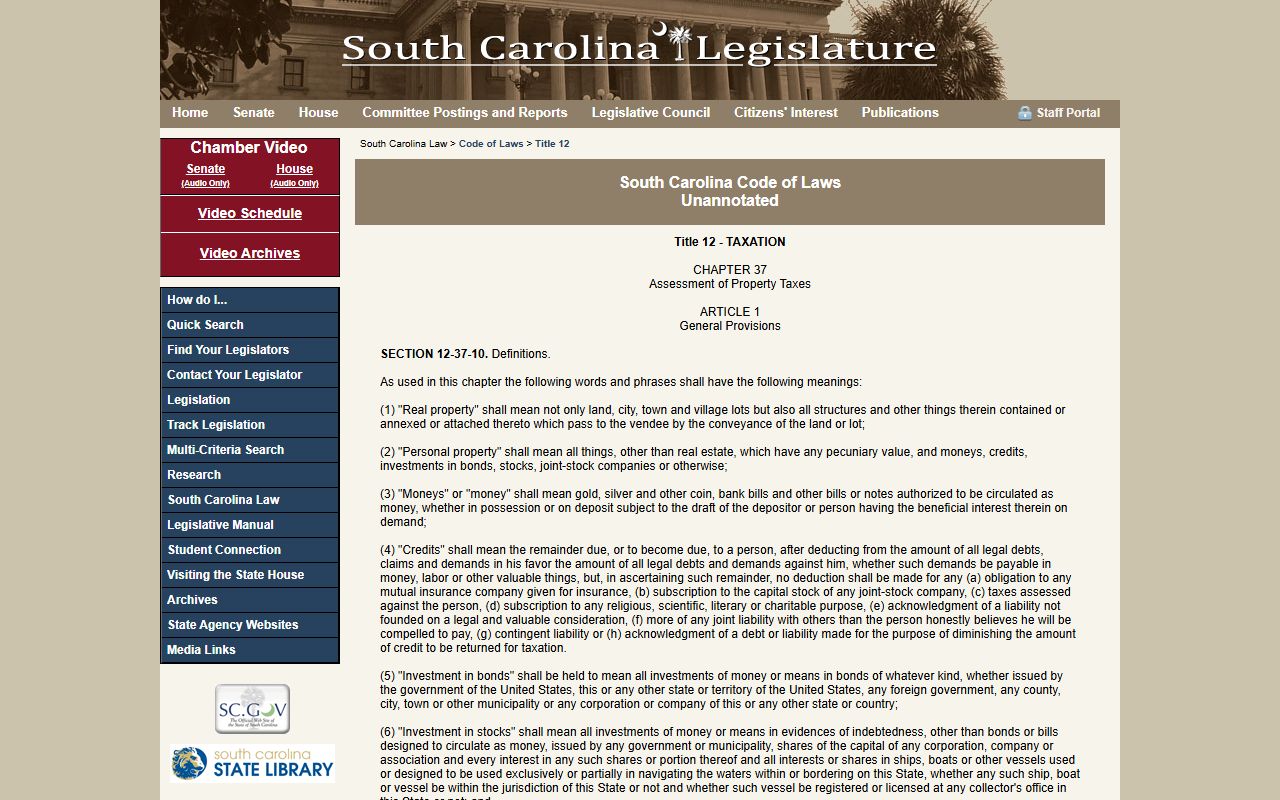
South Carolina Code Title 12, Chapter 37 establishes the legal framework for county assessors, including the Richland County Assessor at 2020 Hampton Street in Columbia. This chapter covers the maintenance of deed records, building permits, and tax maps that underpin every property tax assessment in the county.
Richland County Assessor Office and Property Records
The Richland County Assessor's office at 2020 Hampton Street, Suite 2067, Columbia, maintains detailed records for every parcel of real property in the county. These records include ownership information, property descriptions, building and land data, and tax map references. The Assessor is the source of the fair market value used in every tax calculation.
Under Title 12, Chapter 37, the Assessor must use deed recordings from the Register of Deeds, building permits, and tax maps to keep ownership and value data accurate. Columbia is a dynamic real estate market with frequent transactions and ongoing construction. The Assessor's office processes a high volume of updates throughout the year to keep pace with activity in the county.
Richland County borders Fairfield, Kershaw, Sumter, Calhoun, Lexington, and Newberry counties. Its central location and status as the home of the state capital make it a hub of commercial, residential, and institutional property activity. The Assessor's records reflect this diversity, covering single-family homes, apartment complexes, office buildings, retail properties, industrial sites, and government land.
Assessment Ratios and Richland County Values
South Carolina assigns assessment ratios based on property use. Owner-occupied residential properties that qualify for the legal residence designation are assessed at 4% of fair market value. Commercial properties carry a 6% ratio. Manufacturing real property is assessed at 10.5%.
In Richland County, these ratios apply the same way they do everywhere else in South Carolina. The key difference in Richland County is that the millage rate applied to those assessed values is the highest in the state. A Richland County home valued at $250,000 with the 4% ratio would carry an assessed value of $10,000. Multiply that by the applicable millage rate to arrive at the tax owed.
Title 12, Chapter 43 requires Richland County, like all South Carolina counties, to conduct a full reassessment at least every five years. Given the pace of Columbia's real estate market, reassessment cycles in Richland County can produce significant value changes. Property owners receive notice of changes and have the right to appeal.
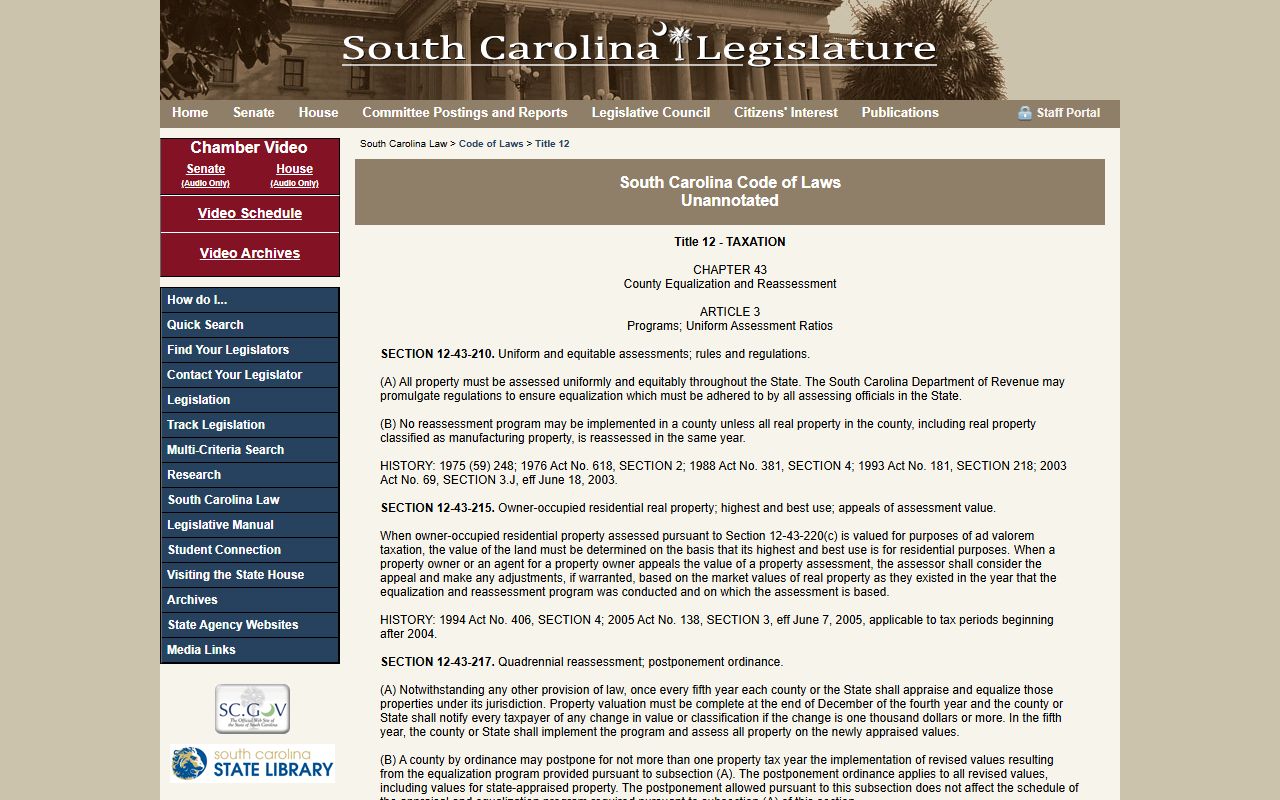
Title 12, Chapter 43 governs the five-year reassessment cycle that applies to Richland County and all South Carolina counties. Given Columbia's active real estate market, reassessments in Richland County can produce substantial changes in assessed values for both residential and commercial properties.
Richland County Property Tax Payments and Deadlines
Property taxes in Richland County are due by January 15 each year. The Richland County Treasurer accepts payments online, in person, and by mail. The online system allows Columbia-area property owners to pay quickly and receive immediate confirmation.
Mailed payments bearing a US Postal Service postmark dated on or before January 15 are treated as timely under Title 12, Chapter 45. This rule applies regardless of when the payment actually arrives at the Treasurer's office. Property owners who mail close to the deadline should use first-class mail and ensure the envelope is postmarked on time.
Chapter 45 also provides for installment payment plans. Eligible Richland County property owners can divide their annual tax obligation into scheduled installments. Given that Richland County has the highest effective tax rate in the state, this option can be particularly meaningful for fixed-income property owners facing large annual bills. Contact the Treasurer's office for enrollment details.
Note: Richland County tax bills, especially for commercial properties, can be substantial due to the county's high millage rate. Reviewing your bill carefully when it arrives and planning for payment well before January 15 avoids penalties.
Delinquent Taxes and Richland County Lien Records
Unpaid Richland County property taxes enter the delinquency process after the penalty period under Title 12, Chapter 51. A formal delinquency notice is issued on April 1. The property owner then has 12 months to redeem the property by paying all owed taxes, penalties, and associated costs.
Delinquent tax records in Richland County are public. Given the volume of properties in Columbia and the rest of the county, delinquency records can cover a broad range of property types and locations. Buyers and investors researching Richland County properties should always check for outstanding tax obligations before proceeding.
Under Title 12, Chapter 49, property taxes are the first lien on real estate. The lien attaches on December 31 of the tax year and takes priority over nearly all other claims. In Richland County's active real estate market, this lien priority means unpaid taxes can complicate refinancing, sales, and title insurance.
Homestead Exemption for Richland County Residents
The South Carolina Homestead Exemption is available to Richland County residents who are 65 or older, permanently disabled, or legally blind. Qualifying property owners receive an exemption equal to the first $50,000 of fair market value, reducing the taxable base used to calculate the annual bill.
Given Richland County's high millage rate, the Homestead Exemption produces a larger dollar saving here than in lower-rate counties. The exemption is applied to the assessed value calculation before millage is applied. Applicants must have owned and occupied the property as their primary residence for at least one year. Applications are filed with the Richland County Auditor's office and renewed automatically in subsequent years.
Appealing Richland County Property Assessments
Richland County property owners who believe their assessed value is too high can pursue a formal appeal. The first step is contacting the Assessor's office at 2020 Hampton Street to request an informal review. This step often resolves errors in property data quickly.
If the informal review does not produce a satisfactory result, the owner files a formal appeal with the Richland County Board of Assessment Appeals. The board reviews evidence and issues an independent ruling. If still unresolved, Title 12, Chapter 60 provides the pathway to the South Carolina Administrative Law Court for a final administrative determination.
In Richland County's active market, strong comparable sales evidence carries significant weight. Recent sales of similar properties in Columbia or the surrounding neighborhoods provide the most direct support for a value reduction argument. Given the high effective tax rate in Richland County, a successful appeal can produce meaningful annual savings. The South Carolina Association of Counties provides resources for understanding the appeal process across all 46 counties.
Nearby Counties
Richland County borders six other South Carolina counties, each with their own property tax record systems operating under the same state statutes.