
Marion County Property Records and Tax Data
Marion County property tax records are administered through county offices in Marion, the county seat, at 101 Southeast Court Street. The Assessor maintains parcel data and values, the Auditor prepares the annual tax rolls, and the Treasurer collects payments and maintains payment records. These offices form the core of the Marion County property tax system. This page covers how each office contributes to the record system, what assessment ratios apply, the payment deadlines property owners must meet, and the legal framework that governs property taxes throughout Marion County.
Marion County Property Tax Quick Facts
Marion County Assessor and Tax Record Functions
The Marion County Assessor's office at 101 Southeast Court Street in Marion maintains the core property tax records for all real property in the county. Under South Carolina Code Title 12, Chapter 37, every county must employ a full-time assessor. Marion County's Assessor is responsible for discovering unlisted property, listing all real property, assigning fair market values, and maintaining the deed records, building permits, and tax maps that support the assessment process.
Marion County property tax records at the parcel level contain several key data fields. Each record identifies the parcel by a unique identification number, lists the current owner name and mailing address, describes the property, and shows the fair market value and assessed value. The classification shown in the record determines the assessment ratio applied. Owner-occupied residential property is assessed at 4% of fair market value. Commercial and investment properties carry a 6% ratio. Manufacturing and industrial uses are assessed at 10.5%, as defined in Chapter 43 of Title 12. The millage rate from all applicable taxing districts is then applied to the assessed value to produce the annual bill.
Tax maps maintained by the Marion County Assessor show parcel boundaries throughout the county. These maps are updated when parcels are divided, combined, or platted as part of a new subdivision. The Assessor also processes building permits for new construction and improvements, using that information to update Marion County property tax records between reassessment cycles.
Note: Marion County property owners who complete significant improvements should confirm with the Assessor that the correct value is reflected in their property tax record. Permits provide the primary trigger for mid-cycle updates.
Assessment Ratios in Marion County Tax Records
Marion County follows the state-mandated assessment ratios set out in Section 12-43-220 of the South Carolina Code. These ratios convert a property's fair market value into the assessed value used to calculate the tax bill. For a home in Marion County valued at $150,000 with the 4% owner-occupied ratio, the assessed value is $6,000. The millage rates from county, school, and any applicable municipal districts are applied to that $6,000 figure.
Agricultural land is another category with favorable treatment. Private individuals who own and operate land for genuine agricultural use qualify for the 4% ratio. Corporate-owned agricultural land is assessed at 6%. Applications for agricultural classification are reviewed by the Marion County Assessor. Documentation of agricultural use is required to support the application. Maintaining the correct classification for rural land in Marion County can produce significant tax savings compared to the commercial rate.
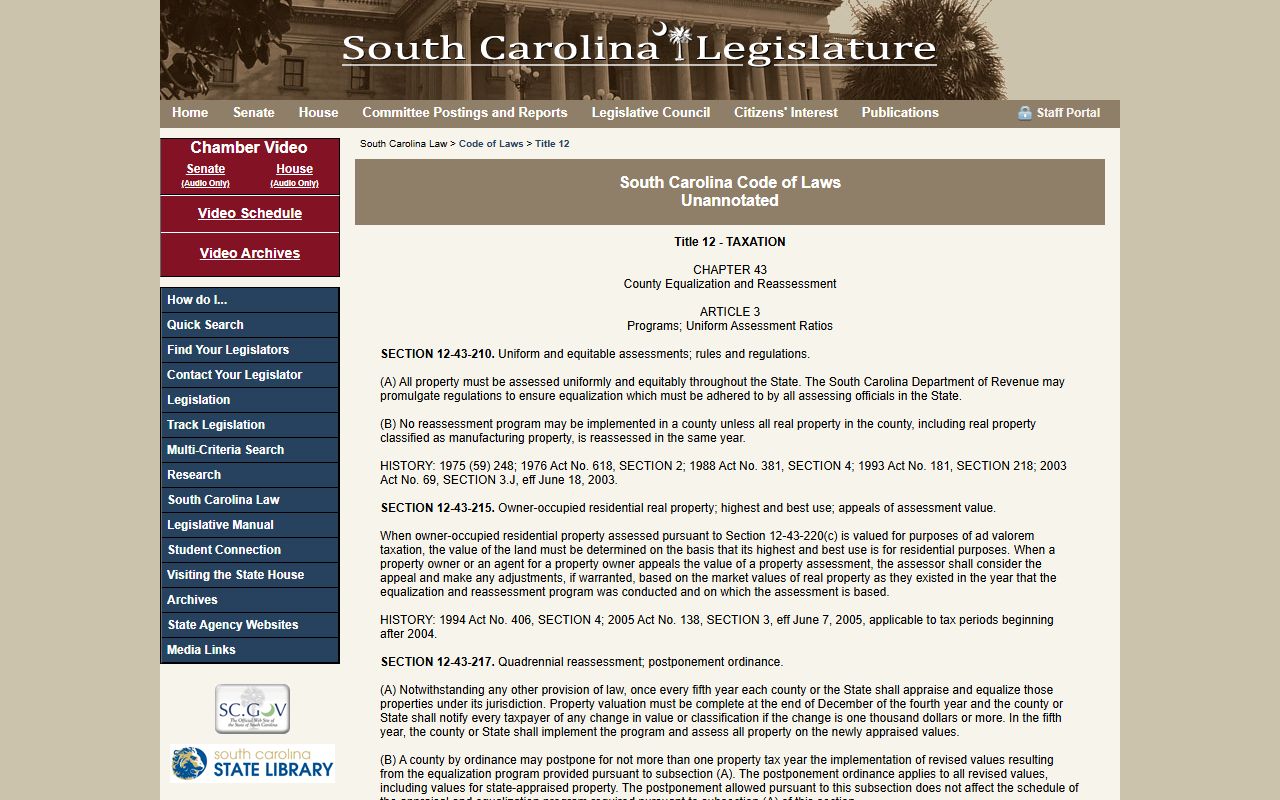
Chapter 43 also governs the five-year reassessment cycle that Marion County follows under Section 12-43-217. Reassessment ensures that Marion County property tax records reflect current market values periodically rather than remaining fixed indefinitely. Property owners receive notice when values change following a reassessment, and they have the right to appeal if they believe the new value is incorrect.
Marion County Property Tax Payment and Treasurer Records
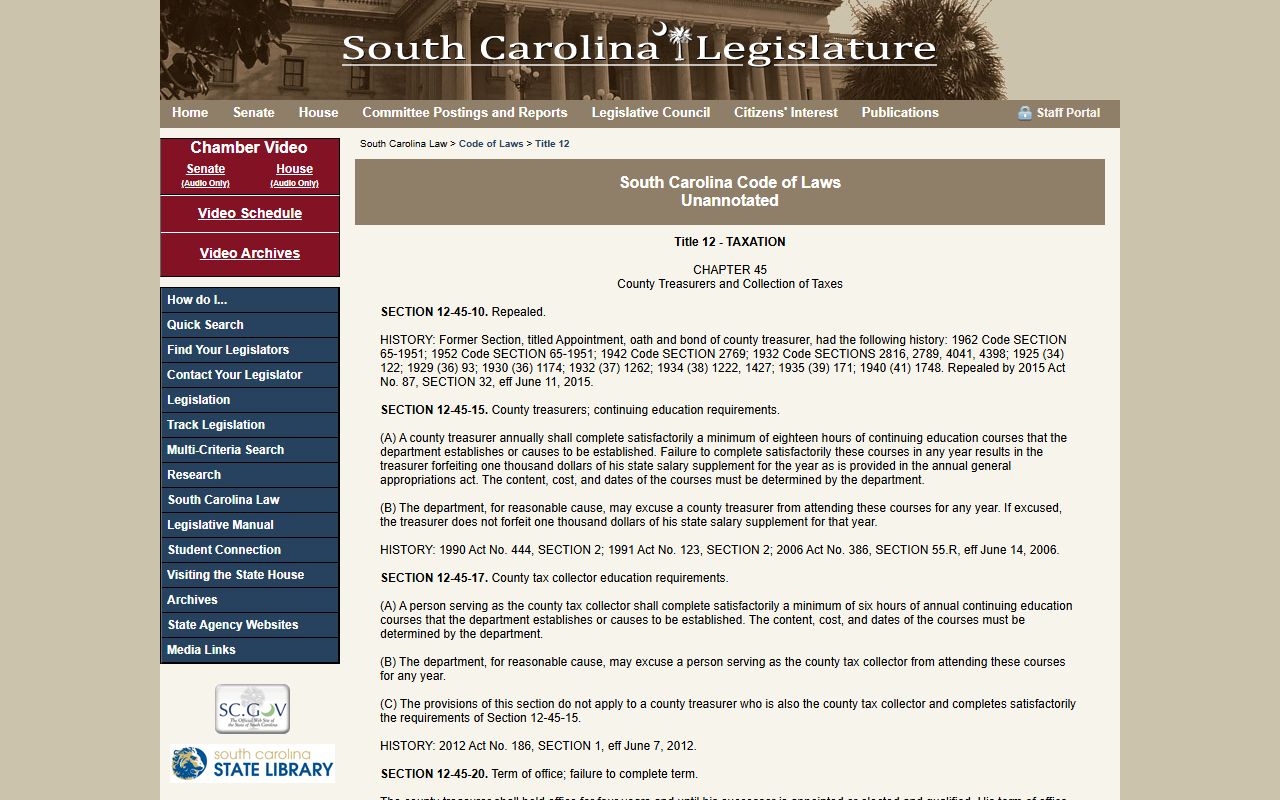
Marion County property taxes are due on January 15 each year. All payments are processed by the Marion County Treasurer's office at 101 Southeast Court Street. South Carolina law under Chapter 45 governs the collection function. The US postmark date determines whether a mailed payment arrives on time. Property owners who mail their payment on or before January 15 are considered current, regardless of when the envelope is opened at the Treasurer's office.
Late payments trigger a penalty schedule that applies in stages. A 3% penalty applies after January 15. After February 2, a 7% penalty is added to the outstanding amount. After March 16, a further 5% penalty applies. These penalties stack, so a Marion County property owner who waits until late March owes the original bill plus 15% in combined penalties. This escalation makes early payment or an installment arrangement a much better outcome. Installment payment plans may be available through the Marion County Treasurer. Contacting the office before the deadline is the recommended approach for property owners who anticipate difficulty paying in full.
Property taxes in South Carolina represent a first lien on real property under Chapter 49. This lien attaches on December 31 of each year, ahead of most other claims against the property. Buyers and lenders conducting due diligence on Marion County real estate should always verify that current and prior-year property taxes are paid before completing a transaction.
Delinquent Property Tax Records in Marion County
Delinquent property taxes in Marion County follow the process defined in Chapter 51 of the South Carolina Code. When taxes remain unpaid through the penalty period, the county must send delinquency notices by April 1. Marion County then advertises delinquent properties over three consecutive weeks before conducting a tax sale. The sale process recovers unpaid taxes while preserving the original owner's right to reclaim the property.
The 12-month redemption period is an important protection for Marion County property owners. After a tax sale, the original owner has one year to pay all outstanding taxes, penalties, and costs to reclaim the property. The redemption cost increases each quarter: 3% in the first quarter, 6% in the second, 9% in the third, and 12% in the fourth. After the 12-month redemption window closes, the tax sale purchaser moves forward with clearing title and the original owner's right to recover the property is extinguished.
Marion County delinquent tax records are public documents. Researchers and prospective buyers who want to confirm that a property has no outstanding tax obligations can review these records. The county Treasurer or Delinquent Tax Collector's office in Marion can provide current delinquency information and details about any upcoming tax sales affecting Marion County parcels.
Note: Marion County delinquent tax notices are sent by April 1, but the property owner's tax obligations and penalties continue to accumulate regardless of whether the notice was received. Property owners who move or change mailing addresses should update their contact information with the Assessor to ensure that all tax notices reach them.
Homestead Exemption for Marion County Property Owners
South Carolina's Homestead Exemption provides direct relief for qualifying Marion County residents on their primary residence. The exemption removes the first $50,000 of fair market value from the taxable calculation. For a home valued at $130,000 in Marion County, the Homestead Exemption reduces the value subject to assessment to $80,000. The tax is then calculated based on the reduced amount, producing a lower bill each year.
Marion County residents who are age 65 or older, legally blind, or permanently and totally disabled qualify for the exemption. The property must be the owner's primary residence. Title must have been held for at least one full year before the application is approved. Applications are submitted through the Marion County Auditor's office at 101 Southeast Court Street. Once approved, the exemption is reflected in the Marion County property tax record and applies automatically to future tax years.
Additional exemptions apply in Marion County for qualifying organizations and land uses. Properties owned by churches, schools, and nonprofits that meet the criteria under Chapter 37 may qualify for full property tax exemptions. Agricultural products held on farms for sale also fall within exemptions defined by the same chapter. Marion County property owners who believe any of these exemptions apply should contact the Assessor or Auditor to determine eligibility and submit the required documentation.
Marion County Tax Records and the Appeal Process
Marion County property owners who believe their assessed value is incorrect can appeal under Chapter 60 of Title 12. The appeal begins with a written request submitted to the Marion County Assessor within the appeal window specified on the assessment notice. The Assessor reviews the evidence and issues a determination. If the outcome is not satisfactory, the property owner can bring the matter before the Marion County Board of Assessment Appeals.
Further escalation is available to the Administrative Law Court. This court handles property tax disputes from across South Carolina and is the final administrative step before circuit court. Filing documentation should include recent comparable sales in Marion County, an independent appraisal if available, and any evidence that the Assessor's data does not correctly reflect the property's characteristics. Acting quickly after receiving an assessment notice is important. Missing the appeal deadline means the assessed value stands for the full tax year.
The South Carolina Department of Revenue provides statewide oversight of county assessors. The South Carolina Association of Counties publishes resources for property owners navigating assessment disputes. Both provide context that helps Marion County property owners understand their rights within the broader South Carolina property tax framework established by Title 12.
Nearby Counties
Marion County borders several South Carolina counties where similar property tax record systems and procedures are in place.