
Lexington SC Property Tax Records
The Town of Lexington is the county seat of Lexington County and one of the fastest-growing communities in South Carolina. Property taxes for Lexington properties are administered by Lexington County, not by the town itself. The county assessor determines fair market values, the auditor calculates bills using both county and town millage rates, and the treasurer collects payments. Whether you are searching for Lexington property tax records for a current home, a recent purchase, or a parcel under consideration, this page covers how records are maintained, where to find them, and what the key dates and rules are for Town of Lexington properties.
Lexington Property Tax Quick Facts
Town of Lexington: City vs. County Property Tax Records
It is important to distinguish between the Town of Lexington and Lexington County when searching property tax records. This page covers the Town of Lexington, which is the municipality. Lexington County as a whole is a separate entity with its own page at Lexington County Property Tax Records. The town sits inside the county and uses the county's tax administration infrastructure, but the two are distinct for the purposes of records research.
The Town of Lexington adds a municipal millage rate to property tax bills for parcels within town limits. This town millage funds local services including town public safety, streets, and administration. The county assessor and auditor handle the underlying assessment and billing process, with the town millage applied as one component of the total bill alongside county and school district rates.
Town Hall for the Town of Lexington is at 111 Maiden Lane, Lexington, SC 29072. Town staff can be reached at (803) 359-7779. For property tax questions involving assessments, billing, or payment history, however, town hall will direct you to the Lexington County offices. The Lexington County Assessor handles all valuation matters at (803) 785-8330.
Note: The Town of Lexington also has Tax Increment Financing districts in some commercial areas within town limits. These TIF districts capture a portion of property tax growth from increases in assessed values to fund public improvements in designated zones. Residential parcels in the town are generally not affected, but commercial property owners near these zones may see references to TIF district designations on their records.
Lexington Property Tax Records: Searching Online
Lexington County's online portal at lexsc.gov is where Town of Lexington property owners access records and payment information without visiting a county office in person. The portal provides parcel search by address, owner name, or parcel number. Once a record is found, users can view the assessed value, applicable exemptions, current bill, and payment history.
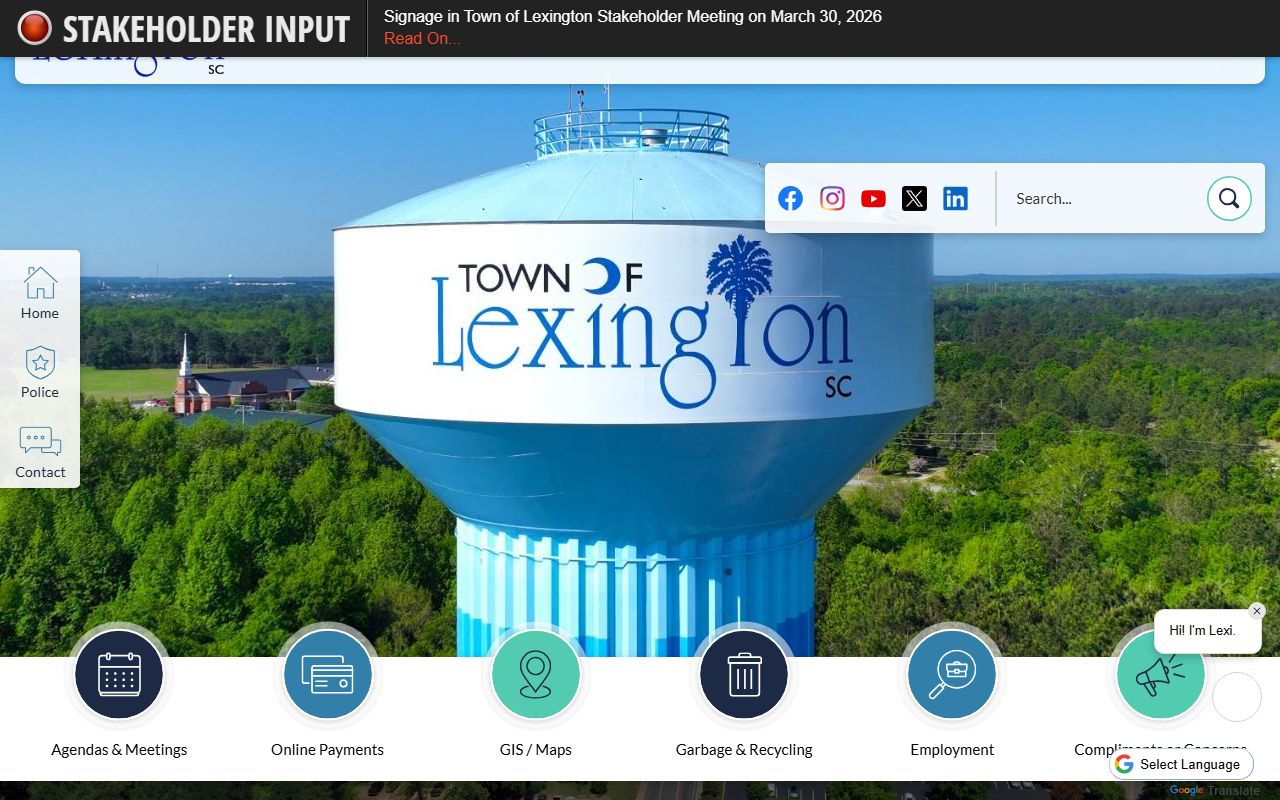
The lexsc.gov portal integrates assessor, auditor, and treasurer data, meaning a single property search can surface assessed values from the assessor, bill amounts from the auditor, and payment status from the treasurer all in one place. This consolidated view is particularly useful for buyers conducting due diligence on Town of Lexington properties or owners verifying that a payment has been posted correctly.
For broader context on South Carolina property tax administration and a directory of county offices, the South Carolina Association of Counties provides a statewide resource. Lexington County's contact information and comparison data appear there alongside all 46 counties in the state.
Lexington Property Assessment Ratios and Calculations
Lexington County applies the standard South Carolina assessment ratios to all Town of Lexington properties. Owner-occupied primary residences carry a 4% ratio under S.C. Code Ann. Title 12, Chapter 43. Commercial property, rental homes, and non-owner-occupied residences are assessed at 6%. Manufacturing property is assessed at 10.5%.
With Lexington County's median home value around $197,600, the practical effect of these ratios is significant. A Town of Lexington home at the median value carries an assessed value of $7,904 at the 4% owner-occupied rate. At 6%, the same home carries an assessed value of $11,856. The full mill rate for a Lexington town parcel includes town, county, and school district millage, and the assessed value is multiplied against that combined rate to produce the total annual bill.
The difference between qualifying for the 4% legal residence rate and being taxed at 6% adds up over time. Town of Lexington homeowners who use their property as a primary residence but have not yet filed for the legal residence classification should contact the Lexington County Assessor. The application is a one-time filing that locks in the lower rate going forward.
The South Carolina Department of Revenue publishes guidance on assessment ratio classifications and handles certain statewide tax functions, though local property tax administration in Lexington remains with the county offices.
Lexington Property Tax Due Dates and Penalty Schedule
Town of Lexington property taxes follow the statewide January 15 due date. Tax bills are mailed in the fall and reflect the millage rates set during the prior year's budget process. Payments made by January 15 carry no penalty.
After January 15, the standard South Carolina penalty schedule applies. A 3% penalty attaches on January 16. The penalty increases to 10% after February 2 and rises further to 15% after March 16. These escalating charges are established in S.C. Code Ann. Title 12, Chapter 45 and apply to all Lexington County properties including those within the Town of Lexington.
Properties that reach delinquent status enter the tax sale process governed by S.C. Code Ann. Title 12, Chapter 51. A tax lien attaches to all unpaid Lexington properties on December 31 of each tax year. If a parcel sells at a tax sale, the prior owner has a 12-month redemption window. Quarterly interest during redemption accrues at 3% for the first quarter and increases to 6%, 9%, and 12% for each subsequent quarter. Paying all delinquent amounts within the redemption window restores ownership.
Note: Lexington County's rapid growth has made property records searches increasingly common as buyers and real estate professionals verify tax status before closing. Checking the lexsc.gov portal confirms current bill status and whether any delinquencies exist on a parcel before a transaction is finalized.
Lexington Homestead Exemption for Qualifying Residents
South Carolina's Homestead Exemption is available to Town of Lexington homeowners who are 65 or older, permanently and totally disabled, or legally blind. The exemption removes the first $50,000 of fair market value from the taxable base of a primary residence. On a $197,600 home, this brings the taxable value down to $147,600 before the 4% assessment ratio is applied, producing a meaningfully lower annual tax bill.
Applications for the Homestead Exemption go through the Lexington County Auditor's office. Applicants must provide documentation confirming eligibility, whether by age, disability, or blindness, and must establish that the property is their primary residence. The exemption does not apply automatically and is not retroactive to prior years.
The Homestead Exemption is rooted in S.C. Code Ann. Title 12, Chapter 37, the same chapter that governs assessment classifications and the legal residence rate. Town of Lexington seniors and disabled homeowners who may qualify but have not applied should contact the Lexington County Auditor to start the process. The savings compound annually once the exemption is approved.
Reassessment in Lexington and How It Affects Property Taxes
South Carolina's five-year reassessment cycle under S.C. Code Ann. Title 12, Chapter 43, Section 12-43-217, applies to all Lexington County properties including those in the Town of Lexington. When Lexington County completes a countywide reassessment, property owners receive notice of their updated fair market values. That notice period is when appeals must be filed if a new value appears too high.
Lexington is one of the fastest-growing communities in South Carolina. Sustained residential growth, proximity to Columbia's employment base, and strong school district performance have driven consistent appreciation in Town of Lexington home values. This growth creates substantial value changes at each reassessment cycle. Property owners whose assessed values increased significantly during a recent reassessment may want to compare the county's value against recent sales of similar homes in the area.
The appeal process begins informally with the Lexington County Assessor at (803) 785-8330. If the informal discussion does not resolve the dispute, a formal appeal to the Lexington County Board of Assessment Appeals follows. Further review is available through the Administrative Law Court under S.C. Code Ann. Title 12, Chapter 60. Strict deadlines apply at each stage, so acting promptly after receiving a reassessment notice is essential.
Lexington's Growth and Property Tax Record Demand
The Town of Lexington has experienced some of the most rapid residential and commercial growth in the Columbia metro area over the past two decades. New subdivisions, retail development, and infrastructure investment have transformed the town from a small county seat into a substantial suburban community. This growth has generated high demand for property tax record searches from buyers, real estate professionals, lenders, and current property owners.
Buyers conducting due diligence on Town of Lexington properties regularly search tax records to verify assessed values, confirm that taxes are current, and understand what the annual bill will look like after purchase. The lexsc.gov portal makes this research accessible without requiring in-person visits to the Lexington County courthouse.
Commercial activity in Lexington has also grown, bringing with it more complex property tax situations involving the 6% commercial assessment ratio and TIF district considerations for some parcels. Business owners and commercial property investors searching Lexington property tax records should review parcel records carefully and confirm whether any special district designations apply to specific addresses. The Lexington County Assessor can clarify TIF district boundaries and any special district tax overlays that affect individual parcels within town limits.
Nearby Cities
The Town of Lexington sits near several major communities in the Columbia metro area. Explore property tax records for nearby cities below.
Parent County
Property taxes in Lexington are administered by Lexington County. The county assessor, auditor, and treasurer handle valuation, billing, and collection for all properties within Lexington.